Every material in construction has a personality. Some are dependable in the right setting. Some pretend to be tougher than they are. MR plywood falls squarely into the second category. It has earned its place over the years, but it has also been stretched far beyond what it was ever designed to do.
On most Indian construction sites, MR plywood shows up by default. Not because it is perfect, but because it is familiar. Contractors know it. Suppliers stock it. Workers are used to it. And habits, especially in construction, are hard to break.
But as sites get more demanding and expectations of finish, durability, and cost control rise, a simple question keeps coming back. Where does MR plywood actually work well, and where does it quietly fail?
Let us look at this honestly, without romanticising the past or blindly jumping to the next new thing.
What MR Plywood Really Is
MR plywood stands for Moisture Resistant plywood. The name itself is often misunderstood. Moisture resistant does not mean waterproof. It means the adhesive used between the wood layers can tolerate limited moisture exposure.
The wood itself remains wood. It absorbs water. It expands. It contracts. It reacts to its surroundings.
This distinction is important because construction sites are not controlled environments. They are exposed to curing water, rain, humidity, damp ground, and rough handling. MR plywood was never designed for such conditions.
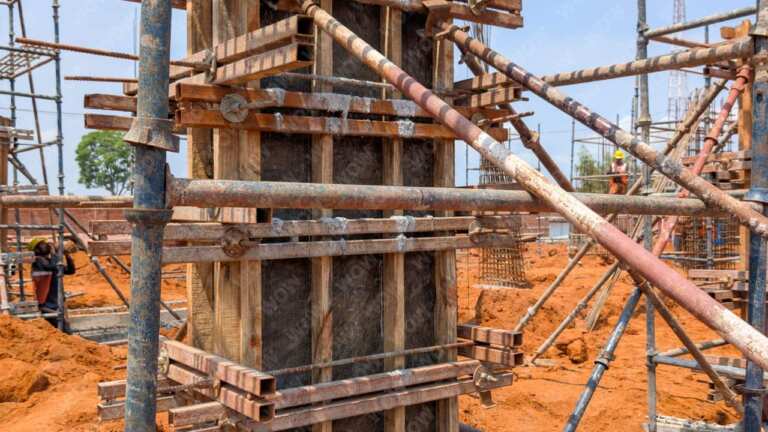
Yet it is often used as a board for construction in shuttering and formwork, where water exposure is constant.
Where MR Plywood Performs Well
It is only fair to acknowledge where MR plywood does its job properly.
1. Interior Applications
MR plywood works reasonably well in dry indoor environments. Temporary partitions, wardrobes, cabinets, and panelling are places where moisture exposure is limited and predictable.
2. Short Duration Uses
If the application is temporary and water exposure is minimal, MR plywood can perform without immediate issues. Short term interior work is a good example.
3. Budget Driven, Low Risk Areas
In projects where finish quality and long term durability are not critical, MR plywood is sometimes used simply because it is economical upfront.
In these scenarios, MR plywood behaves as expected. It does not surprise you. It stays within its comfort zone.
Where MR Plywood Begins to Fail
The real problem starts when MR plywood is taken out of its comfort zone and placed on a construction site.
1. Shuttering and Formwork
This is where MR plywood struggles the most. Shuttering involves continuous exposure to curing water. Water flows over the surface and seeps into edges, nail holes, and joints.
Once water enters, swelling begins. Even slight swelling changes alignment. Concrete takes the shape of the mould, not the intention of the engineer.
This is why shuttering done with MR plywood often results in uneven slab surfaces and extra plastering.
2. Slabs, Beams, and Columns
These structural elements demand dimensional stability. MR plywood changes shape when wet. That is enough to compromise finish quality and sometimes even safety.
3. Repeated Reuse
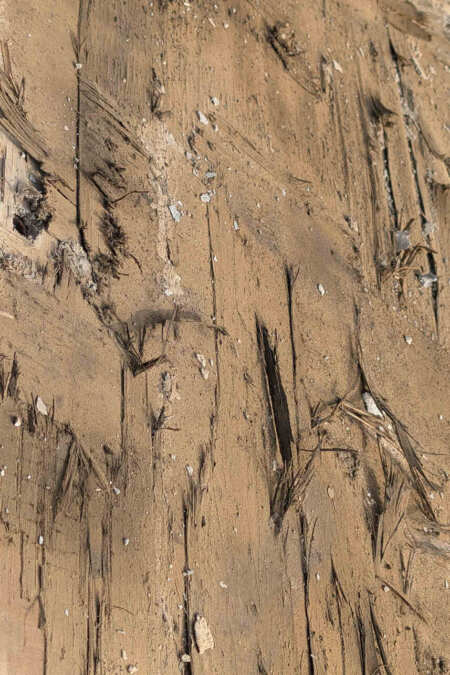
MR plywood degrades with every use. The first pour may look fine. The second slightly worse. By the fifth or sixth use, the surface begins to peel, swell, or crack.
Construction rarely waits for materials to fail gracefully. They fail when deadlines are tight.
4. Outdoor Storage
On most sites, boards are stored wherever space is available. Often on damp soil or in open areas. MR plywood absorbs moisture even when not in use.
By the time it reaches the shuttering stage, damage has already begun.
Why MR Plywood Keeps Getting Used Despite Its Failures
This is where psychology enters construction.
MR plywood feels safe because it is familiar. People know how it fails. They have learned to live with its problems. Extra plastering becomes normal. Replacing boards becomes routine.
But normal does not mean efficient.
As projects scale up and margins tighten, these small inefficiencies add up. This is where builders start looking for alternatives.
Enter PVC Boards and PVC Sheets
As MR plywood limitations became obvious, PVC boards and PVC sheets entered the picture. Plastic does not absorb water. Termites do not eat plastic. That alone makes it attractive.
As a plastic sheet for construction, PVC performs better than MR plywood in wet conditions. It remains dimensionally stable and does not swell.
However, not all PVC boards are meant for structural shuttering. Many are designed for cladding, ceilings, or partitions. They handle moisture well but may not handle concrete load well.
This is where confusion often arises. Plastic as a material is good. But the application matters.
Plastic Formwork Is a Different Category Altogether
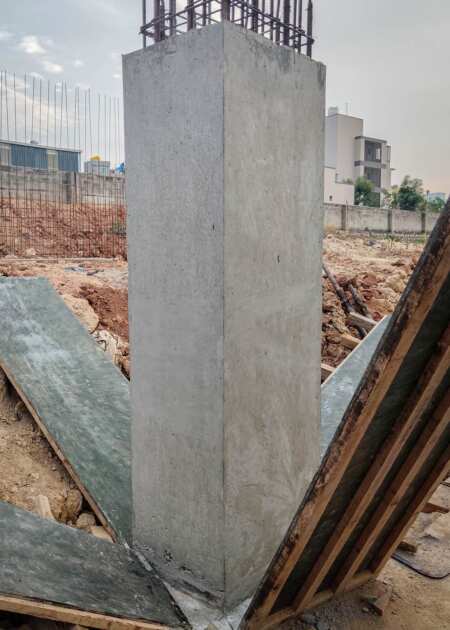
Plastic formwork is not just PVC sheets used on site. It is a system designed specifically to hold wet concrete, repeatedly, without changing shape.
This is where plastic shuttering sheets like WoWBoards stand apart.
WoWBoards are not MR plywood with a coating. They are not decorative PVC boards repurposed for shuttering. They are engineered plastic formwork boards made from recycled plastic, designed for load, repetition, and consistency.
Why Plastic Shuttering Sheets Outperform MR Plywood
1. Water Resistance
MR plywood resists moisture briefly. Plastic does not absorb water at all. WoWBoards remain unchanged even after continuous curing cycles.
2. Dimensional Stability
Plastic shuttering sheets do not swell or warp. Concrete gets the same mould every time. Finish quality stays consistent.
3. Reusability
MR plywood may last a handful of uses. WoWBoards last dozens of cycles with proper handling. Contractors often stop counting.
4. Surface Finish
MR plywood finish degrades with use. Plastic shuttering sheets maintain a smooth surface. Concrete does not stick. Demoulding is clean.
5. Site Handling
Plastic boards are easier to store and handle. They are not affected by damp soil or rain. This simplifies site logistics.
The Cost Reality Contractors Eventually Face
MR plywood appears cheaper at purchase. But replacement, rework, plastering, and rejected boards slowly increase project cost.
Plastic shuttering sheets cost more initially, but their long life and consistent performance reduce cost per use significantly.
This is where many contractors have their realisation moment. The cheaper board is not always the economical one.
The Sustainability Question That Can No Longer Be Ignored
MR plywood is wood based. Trees are cut. Waste plywood often ends up burned or dumped.
WoWBoards are made from recycled plastic. Waste plastic becomes a durable plastic plywood alternative. At the end of its life, it can be recycled again.
Builders today are increasingly expected to answer questions about sustainability. Using plastic shuttering sheets helps answer those questions honestly.
Why Builders Eventually Move Away From MR Plywood
Most builders do not abandon MR plywood suddenly. They experiment. One slab. One beam. One project.
They notice fewer problems. Cleaner finishes. Less rework. Better predictability.
Slowly, MR plywood starts feeling like an unnecessary risk.
Plastic shuttering sheets feel like control.
Conclusion: MR Plywood Has a Place, But Not in Shuttering
MR plywood is not a bad material. It is simply misunderstood and overused.
It performs well indoors, in dry, controlled environments. It fails in shuttering, formwork, and any application involving water and repetition.
Construction today demands materials that can handle moisture, load, and reuse without drama.
Plastic shuttering sheets by WoWMaterials, WoWBoards, are built for exactly that.
They do not swell.
They do not surprise you.
They do not quietly fail.
They deliver consistent performance, pour after pour.
Move Beyond MR Plywood With WoWBoards
If you are still using MR plywood for shuttering because it feels familiar, it may be time to reconsider.
Upgrade to WoWBoards, the plastic shuttering sheets engineered for real construction conditions.
Better finish. Longer life. Fewer failures.
Your site will feel the difference.