
Every construction site has a moment of truth. It usually happens quietly. Not during planning. Not during billing. It happens when the curing water has been flowing for days, the slab is ready to be opened, and everyone waits to see what the concrete looks like.
That moment decides whether your board for construction did its job or quietly betrayed you.
For years, most sites have defaulted to MR plywood. It was familiar. It was available. It felt safe. Then came PVC boards and PVC sheets, promising water resistance and better life. And now, a newer category has started changing the conversation altogether: plastic shuttering sheets designed specifically for formwork, like WoWBoards.
So how does one actually choose? Between MR plywood and PVC boards, what really works on site? And more importantly, what works repeatedly, without surprises?
Let us break this down calmly, honestly, and from the lens of people who have seen boards fail, not just read spec sheets.
First, What Exactly Is MR Plywood?
MR plywood stands for Moisture Resistant plywood. The name itself creates confusion. Many assume it is waterproof. It is not.
MR plywood is made of wood veneers bonded using moisture resistant glue. The glue can resist some moisture. The wood cannot.
This means MR plywood performs reasonably well in indoor environments where moisture exposure is limited and controlled. Think wardrobes, partitions, or temporary interior works.
Construction sites are none of those things.
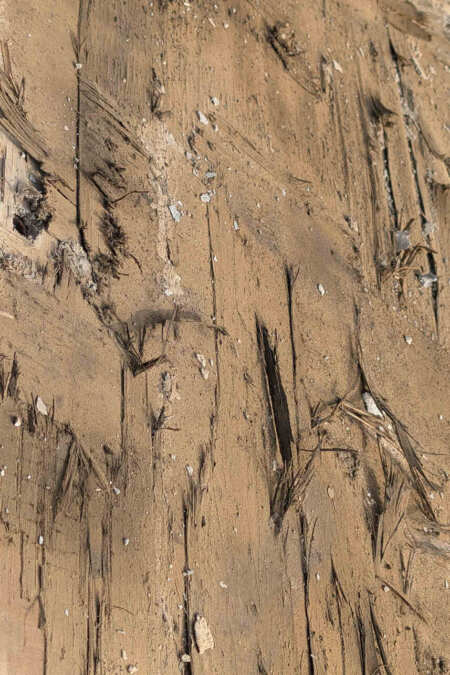
On site, MR plywood faces curing water, rain, damp soil, humidity, and rough handling. Under these conditions, moisture does not politely stay away from the core. It enters through edges, nail holes, and scratches.
Once moisture enters, swelling begins. Alignment goes off. Surface finish suffers. And the board starts its slow journey towards rejection.
Where MR Plywood Performs Well and Where It Does Not
It is important to be fair.
Where MR plywood performs acceptably:
- Dry interior applications
- Temporary non structural uses
- Short duration indoor work
Where MR plywood struggles badly:
- Shuttering and formwork
- Slab and beam casting
- Any application involving curing water
- Outdoor or semi outdoor storage
In shuttering, even small swelling creates visible defects in concrete. MR plywood simply was not designed for this role, even though it is often forced into it.
Now Enter PVC Boards and PVC Sheets
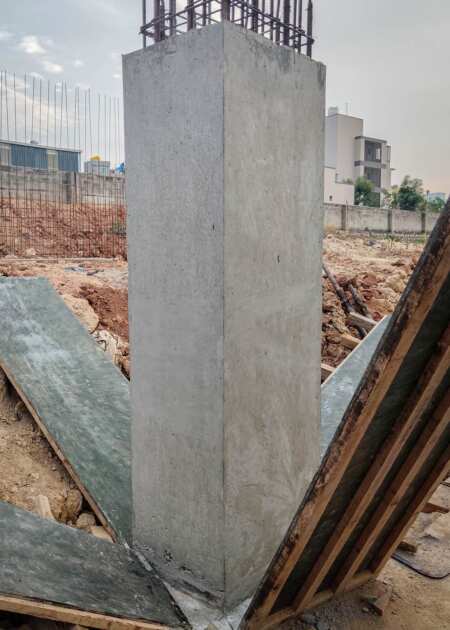
As plywood problems became more obvious, PVC boards and PVC sheets started appearing on sites. The logic was simple. Plastic does not absorb water. Termites do not eat plastic. So surely this is better.
And in many ways, PVC is an improvement over MR plywood.
PVC sheets used as a plastic sheet for construction offer:
- Water resistance
- Termite resistance
- Better dimensional stability than wood
For light applications, this works well.
But here is where things get interesting.
Not all PVC boards are meant for shuttering.
Many PVC sheets available in the market are designed for interior cladding, partitions, or decorative use. They are plastic, yes, but not engineered for the pressure and load of wet concrete.
So while PVC as a material is better than plywood, generic PVC boards are not automatically good formwork.
Why Plastic Formwork Is Not the Same as PVC Sheets
This is a crucial distinction that often gets missed.
PVC sheets are plastic.
Plastic formwork is engineered plastic.
Plastic formwork boards are designed keeping three things in mind:
- Load from wet concrete
- Repeated reuse
- Consistent surface finish
Generic PVC boards may tick the water resistance box, but often fail on load bearing or long term durability.
This is where plastic shuttering sheets like WoWBoards change the game.
Plastic Shuttering Sheets: A Category Built for Construction
WoWBoards are not MR plywood with improvements. They are not decorative PVC sheets repurposed for site use.
They are purpose built plastic shuttering sheets, made from plastic plywood derived from recycled plastic, engineered specifically for construction environments.
This distinction matters more than it sounds.
Let Us Compare MR Plywood and PVC Boards on Real Site Parameters
1. Water and Moisture
MR plywood absorbs water. Swelling is inevitable.
PVC boards resist water.
WoWBoards are completely non absorbent.
Result: Plastic shuttering sheets maintain shape. Plywood does not.
2. Dimensional Stability
MR plywood changes thickness over time.
PVC sheets remain stable but may flex if not designed for load.
WoWBoards are designed to remain stable under concrete pressure.
Result: Better slab thickness control with plastic shuttering sheets.
3. Load Bearing Capacity
MR plywood loses strength once wet.
Generic PVC boards vary widely in strength.
WoWBoards are engineered for RCC loads.
Result: Predictable performance with WoWBoards.
4. Surface Finish
MR plywood gives decent finish initially, then degrades.
PVC sheets give smooth finish but may scratch or dent.
WoWBoards maintain smooth surface across multiple pours.
Result: Consistent concrete finish with plastic shuttering sheets.
5. Reusability
MR plywood often lasts 5 to 10 uses in shuttering.
PVC boards last longer but vary by quality.
WoWBoards last dozens of cycles with proper handling.
Result: Lower cost per use with WoWBoards.
6. Site Handling and Storage
MR plywood needs dry storage.
PVC boards handle moisture better.
WoWBoards can be stored on site without fear of damage.
Result: Easier logistics with plastic formwork.
The Cost Question Everyone Asks
MR plywood looks cheaper at purchase.
PVC boards look slightly more expensive.
Plastic shuttering sheets look like an investment.
But construction economics are not about purchase price. They are about cost per use.
When MR plywood fails after a few uses, replacement cost kicks in. When finish quality drops, plastering cost follows. When boards swell, rework happens.
WoWBoards avoid these hidden costs. Over time, they are often the most economical option.
This is where Tim Urban logic applies. Your brain sees the cheaper board. Your spreadsheet sees the smarter board.
The Sustainability Angle Builders Can No Longer Ignore
MR plywood consumes wood.
PVC boards may or may not be recyclable.
WoWBoards are made from recycled plastic. Waste plastic is converted into durable construction material. At end of life, it can be recycled again.
For builders increasingly conscious of environmental impact and compliance, this matters.
Using plastic shuttering sheets like WoWBoards reduces deforestation and construction waste simultaneously.
Why Builders Eventually Move to WoWBoards
Most builders do not switch overnight. They test.
One slab.
One beam.
One section of formwork.
Then they notice:
- Less swelling
- Cleaner demoulding
- Better finish
- Fewer rejected boards
- Easier site management
Gradually, MR plywood and generic PVC sheets start feeling like compromises.
Plastic shuttering sheets built for formwork feel like the logical end point.
So What Should You Choose Today?
If the choice is strictly between MR plywood and PVC boards, PVC boards generally perform better on site.
But if the goal is long term performance, consistency, and peace of mind, plastic shuttering sheets like WoWBoards clearly stand out.
They combine:
- Water resistance of plastic
- Strength needed for formwork
- Reusability across projects
- Sustainability through recycled material
They are not just a replacement. They are an upgrade.
Conclusion: Choose for the Site, Not the Habit
MR plywood is familiar. That does not make it right.
PVC boards are better. That does not make them ideal.
Construction today demands materials that can handle water, load, repetition, and expectations.
Plastic shuttering sheets by WoWMaterials, WoWBoards, are built for exactly that.
They do not rely on glue.
They do not swell.
They do not surprise you on demoulding day.
They simply work.
Build Smarter With WoWBoards
If you are still choosing boards based on habit, it may be time to pause.
Upgrade to WoWBoards, the plastic shuttering sheets engineered for real construction conditions.
Better finish. Longer life. Fewer problems.
Your concrete will show the difference.