Walk into any plywood shop and ask for MR plywood and you will be greeted with confidence. Labels will be shown. Grades will be explained. Glue quality will be discussed with seriousness. It will all sound reassuring.
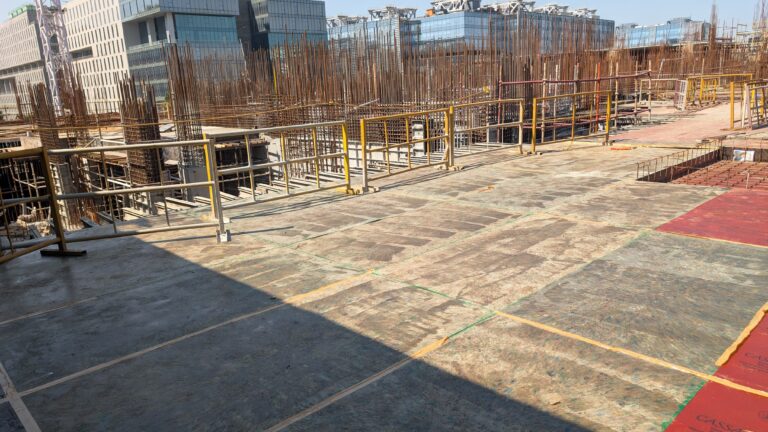
And yet, a few weeks later on site, the same MR plywood will swell, warp, peel, or quietly fail during shuttering.
This is where many builders feel confused. If the grade was right, why did the board fail?
The answer lies in a simple truth. Grades tell you how plywood is made. They do not tell you how plywood behaves on a construction site.
Let us decode MR plywood grades properly, understand what they actually mean, where they help, where they do not, and what builders should really look for when choosing a board for construction, especially for shuttering and formwork.
What MR Plywood Actually Means
MR plywood stands for Moisture Resistant plywood. The keyword here is resistant, not proof.
MR grade refers to the adhesive used to bond the wood veneers. The glue is designed to resist moisture better than standard interior glue. That is all.
The wood layers themselves remain wood. They absorb moisture. They expand. They contract. They react to humidity.
So when builders assume MR plywood is suitable for wet construction environments, the misunderstanding begins.
Common MR Plywood Grades Builders Encounter
MR plywood is often discussed alongside other grades, which adds to the confusion.
- MR plywood is intended for interior use with occasional moisture exposure
- BWR and BWP grades improve glue resistance further
- Film faced plywood adds a surface layer but keeps the same wooden core
What all these have in common is wood at the centre.
Grades talk about glue. Construction sites challenge the wood.
Why MR Plywood Grades Do Not Predict Site Performance
A grade certificate cannot predict what happens when curing water flows continuously over shuttering.
It cannot predict how edges will behave when stacked on damp soil.
It cannot predict how a board will respond after repeated wetting and drying cycles.
This is why two MR plywood boards of the same grade can behave very differently on site. Conditions matter more than certification.
Builders often assume that upgrading the grade will solve the problem. In reality, it only delays it.
Where MR Plywood Grades Do Matter
To be fair, MR plywood grades are not meaningless.
They matter in:
- Interior furniture
- Dry partitions
- Indoor panelling
- Controlled environments
In these settings, MR plywood performs as expected. Moisture exposure is limited and predictable.
The problem arises when MR plywood is used for shuttering, slab casting, and formwork, which are anything but controlled.
Why Shuttering Is the Worst Place to Rely on MR Grades
Shuttering exposes boards to:
- Continuous curing water
- Rain and humidity
- Concrete pressure
- Vibration
- Repeated reuse
No MR plywood grade is designed for this.
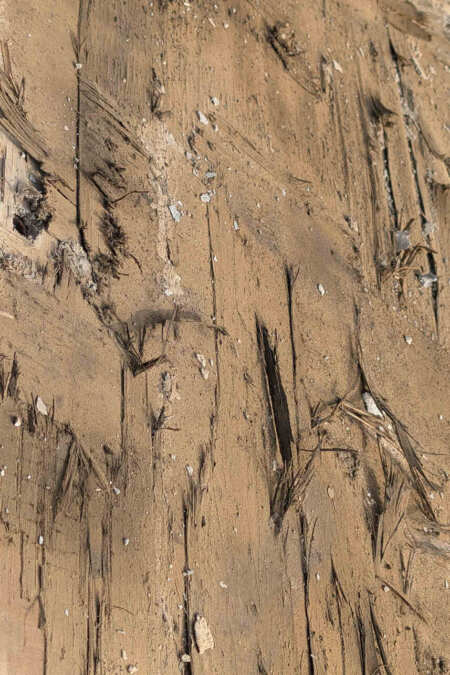
Water enters through edges and fasteners. Once inside, swelling begins. The glue may hold, but the wood expands. Alignment suffers. Concrete finish degrades.
Grades do not stop swelling. They do not prevent warping. They do not guarantee dimensional stability.
This is why shuttering failures continue even with higher grade plywood.
The Shift Toward PVC Boards and PVC Sheets
As MR plywood limitations became obvious, builders began experimenting with PVC boards and PVC sheets.
Plastic does not absorb water. Termites do not eat it. That alone solves many plywood problems.
As a plastic sheet for construction, PVC offers better moisture resistance and longer life than MR plywood.
But here again, a new confusion emerged. Not all PVC boards are designed for shuttering.
Many PVC sheets are meant for interior cladding, ceilings, or partitions. They handle moisture well but may flex under concrete load.
So while PVC is a step forward, it is not automatically the final answer.
Plastic Formwork Is Not About Grades, It Is About Engineering
This is where the conversation needs to change.
Plywood relies on grades.
Plastic formwork relies on design.
Plastic formwork boards are engineered to:
- Handle concrete pressure
- Maintain shape under load
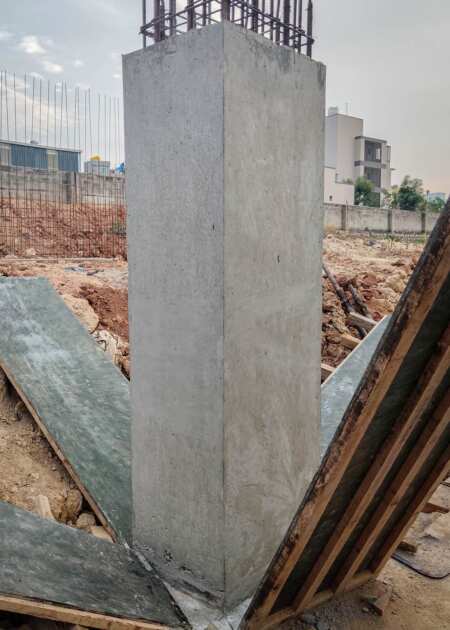
- Deliver consistent surface finish
- Survive repeated reuse cycles
This is why plastic shuttering sheets like WoWBoards outperform both MR plywood and generic PVC boards.
They do not depend on glue quality or veneer thickness. They depend on material science and structural design.
What Builders Should Actually Look For Instead of Grades
If grades do not guarantee performance on site, what should builders focus on?
1. Dimensional Stability
Does the board change shape when wet?
MR plywood does.
Plastic shuttering sheets do not.
2. Load Bearing Capacity
Can the board handle wet concrete pressure repeatedly?
Most MR plywood struggles.
WoWBoards are engineered for it.
3. Reusability
How many times can the board be used before rejection?
MR plywood offers limited cycles.
Plastic shuttering sheets offer many.
4. Surface Finish Consistency
Does the surface degrade over time?
Plywood does.
Plastic formwork remains smooth.
5. Site Storage Tolerance
Can the board survive typical site storage conditions?
MR plywood needs protection.
Plastic boards tolerate moisture and rough handling.
These factors matter far more than the grade printed on a sheet.
Why Plastic Plywood Changes the Equation
Plastic plywood like WoWBoards removes the core problem entirely. There is no wood to absorb moisture.
This means:
- No swelling
- No delamination
- No warping
- No termite damage
It also means consistency. The board behaves the same on day one and day fifty. Grades become irrelevant because the failure mechanism itself is eliminated.
The Sustainability Aspect Builders Cannot Ignore
MR plywood, regardless of grade, depends on wood. Trees are cut. Waste plywood is often discarded or burned.
WoWBoards are made from recycled plastic. Waste plastic is converted into durable construction material. At the end of life, it can be recycled again.
For builders increasingly asked about sustainability and compliance, this matters.
Plastic shuttering sheets offer a responsible alternative without compromising performance.
Why Builders Eventually Stop Talking About Grades
Builders who switch to plastic shuttering sheets often notice something interesting. They stop discussing grades altogether.
Instead, they talk about:
- Number of uses
- Finish quality
- Ease of handling
- Reduction in rework
The conversation shifts from certification to performance.
This is usually when MR plywood starts feeling like an outdated solution.
From Grade Obsession to Performance Thinking
The construction industry has long relied on grades as a shortcut for quality. In plywood, this made sense once. But modern construction demands materials that perform under harsh conditions, not just pass laboratory tests. Plastic shuttering sheets represent this shift. They are designed for site reality, not just specification sheets.
Conclusion: MR Plywood Grades Explain the Product, Not the Outcome
MR plywood grades tell you how the board was manufactured. They do not tell you how it will behave on a wet, demanding construction site.
For shuttering and formwork, grades are not enough. Material choice matters more.
Plastic shuttering sheets by WoWMaterials, WoWBoards, eliminate the core weaknesses of plywood rather than trying to manage them.
They offer consistency, durability, and predictability that grades cannot promise.
Move Beyond Grades With WoWBoards
If you are still choosing boards based on MR grades and hoping for better results, it may be time to rethink.
Choose WoWBoards, the plastic shuttering sheets engineered for real construction conditions.
Stop managing plywood problems. Start building with confidence.
Your site will notice the difference.