
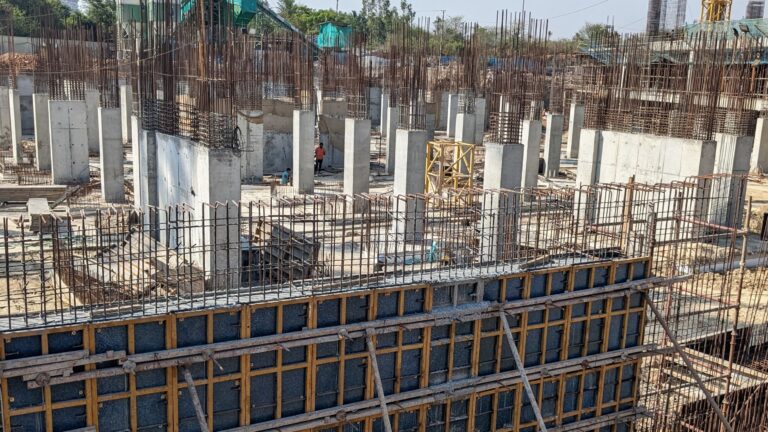
Every year, the Indian monsoon arrives with the confidence of a seasoned actor. No auditions. No announcements. Just a dramatic entry. And every year, construction sites across the country brace themselves.
Steel gets rusted. Cement needs extra care. And shuttering boards face their toughest test.
This is usually when someone points to a stack of ply and says, “Don’t worry, it’s a waterproof ply sheet.”
That sentence has aged badly.
Because if Indian monsoons have taught the construction industry anything, it is this. Not everything that claims to be waterproof can actually survive weeks of rain, humidity, curing water, and damp soil.
So let us ask the question honestly. Can waterproof boards really withstand Indian monsoon conditions? And if not, what actually does?
Understanding the Indian Monsoon From a Construction Perspective
The monsoon is not just rain. It is a combination of challenges that quietly work against materials.
- Continuous rainfall
- High humidity day and night
- Damp ground that never fully dries
- Extended curing cycles
- Sudden waterlogging on site
- Limited sunlight for drying
This is not an occasional splash of water. This is sustained exposure.
Any ply for shuttering that hopes to survive the monsoon must handle all of this together.
What Waterproof Ply Sheets Actually Mean
The term waterproof ply sheet is one of the most misunderstood labels on construction sites.
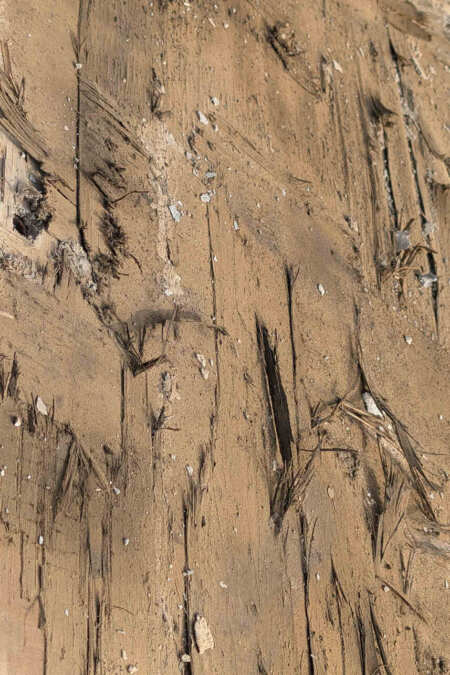
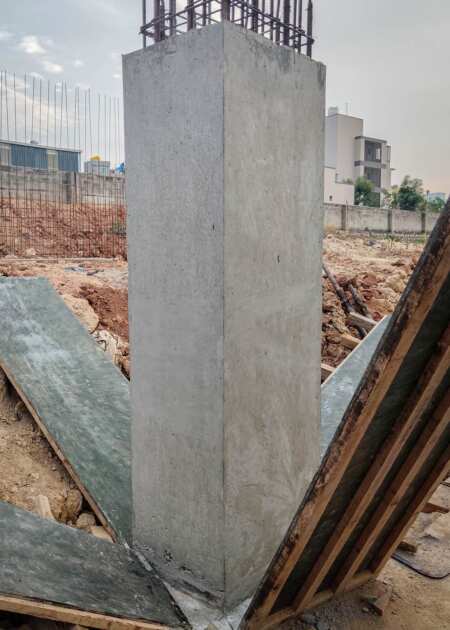
Most waterproof plywood is still plywood at its core. It is made of wood veneers bonded using water resistant or waterproof glue. The glue may resist moisture. The wood does not.
Water does not need permission to enter plywood. It enters through:
- Cut edges
- Nail holes
- Surface scratches
- Gaps between sheets
Once water enters, wood absorbs it. Swelling begins. Shape changes. Alignment is lost.
The glue may hold the layers together, but the board is already compromised.
This is why many shuttering ply boards fail not during the first pour, but during the monsoon when exposure becomes continuous.
Why Monsoon Conditions Expose the Weakness of Plywood
Plywood can survive occasional moisture. It struggles with sustained moisture.
During monsoon:
- Boards never fully dry
- Moisture remains trapped inside
- Swelling does not reverse
- Damage accumulates
A ply board that might last ten uses in dry weather may struggle to last three during the monsoon.
This is not because the board is low quality. It is because the material itself is not suited for the environment.
The Reality on Site During Monsoon
Let us look at what actually happens on site.
Shuttering boards are stacked on damp ground because there is no dry space.
Rainwater splashes onto edges repeatedly.
Curing water flows constantly.
Humidity prevents drying.
Even before a board is fixed into shuttering, it has already absorbed moisture.
This is where most ply for shuttering begins to fail silently.
Why Plastic Changes the Monsoon Equation
Plastic behaves very differently from wood.
A plastic ply board does not absorb water. There are no fibres to swell. No pores to fill. No internal damage.
Rain can fall on it all day. Curing water can flow for weeks. Humidity can stay high. The board remains unchanged.
This is why plastic boards started appearing more frequently on sites that face heavy monsoon conditions.
Plastic Shuttering Boards vs Waterproof Ply During Monsoon
Let us compare behaviour, not labels.
Water Absorption
Waterproof ply absorbs water slowly but continuously.
Plastic shuttering boards do not absorb water at all.
Dimensional Stability
Plywood swells and warps.
Plastic remains dimensionally stable.
Drying Requirement
Plywood needs drying cycles to recover partially.
Plastic does not need drying.
Surface Finish
Wet plywood degrades in finish quality.
Plastic maintains a smooth surface.
Reuse
Plywood reuse reduces sharply during monsoon.
Plastic reuse remains consistent.
This is why many contractors notice that their plywood consumption increases during monsoon months.
Why Many PVC and Plastic Boards Still Fail in Monsoon
At this point, some builders say, “We tried plastic sheets. They bent.”
This is an important distinction.
Not all plastic sheets are designed for shuttering.
Many plastic boards available in the market are meant for partitions, cladding, or interiors. They resist water but are not designed to handle the pressure of wet concrete.
So while plastic as a material is correct, application specific engineering still matters.
What Makes Plastic Shuttering Boards Like WoWBoards Different
WoWBoards are not just plastic sheets. They are engineered plastic shuttering boards designed specifically for construction and formwork.
They are built keeping three monsoon realities in mind:
- Continuous water exposure
- High humidity
- Repeated use under load
Why WoWBoards Perform Better in Monsoon
- They do not absorb water
- They do not swell or warp
- They retain strength under concrete pressure
- They deliver consistent surface finish
- They can be stored outdoors without damage
During monsoon, when plywood struggles just to survive, WoWBoards continue working without complaint.
The Finish Test During Monsoon
Concrete finish during monsoon is often compromised because shuttering boards degrade faster.
Wet plywood surfaces leave marks. Edges soften. Surface quality drops.
Plastic shuttering boards provide a consistent mould. Concrete does not stick easily. Demoulding remains clean even in wet conditions.
This reduces plastering and surface correction, which is especially valuable during monsoon when drying time is limited.
The Cost Impact of Monsoon on Shuttering Materials
Monsoon does not just test materials. It tests budgets.
Plywood replacement increases.
Rework increases.
Labour increases.
Delays increase.
These costs are rarely attributed directly to plywood failure, but they add up.
Plastic shuttering boards reduce these hidden costs by maintaining performance through the season.
This is why contractors who switch often say their sites feel calmer during monsoon.
Storage and Handling During Monsoon
Plywood demands dry storage. During monsoon, that is almost impossible.
Plastic shuttering boards do not demand protection. They can be stacked on site without fear of swelling or damage.
This flexibility matters more than most people realise.
The Psychological Shift on Site
There is an interesting behavioural change that happens when sites use plastic shuttering boards during monsoon.
Supervisors stop worrying about boards.
Workers stop avoiding wet stacks.
Planning becomes simpler.
When materials stop failing unexpectedly, the site breathes easier.
Why WoWBoards Are the Safer Bet for Indian Conditions
Indian construction does not happen in controlled environments. It happens in heat, dust, rain, and humidity.
Materials that perform well only in dry weather are not reliable.
WoWBoards are designed for Indian conditions, not ideal conditions.
They are plastic shuttering boards that:
- Survive monsoon without damage
- Deliver consistent finish
- Reduce material wastage
- Lower cost per use
They do not fight the monsoon. They ignore it.
Conclusion: Waterproof Claims Are Not Enough for Indian Monsoon
The Indian monsoon is unforgiving. It exposes the difference between resistance and immunity.
Waterproof ply sheets resist water temporarily. Plastic shuttering boards are immune to it.
If you want shuttering material that truly withstands monsoon conditions, the answer is not better plywood. It is a different material altogether.
Plastic shuttering boards like WoWBoards are built for sustained exposure, repeated use, and real site conditions.
Build Monsoon Ready With WoWBoards
If you are tired of watching plywood fail every monsoon, it is time to upgrade.
Choose WoWBoards, the plastic shuttering boards engineered for Indian weather.
Stronger. More reliable. Monsoon proof.
Your site will feel the difference.