
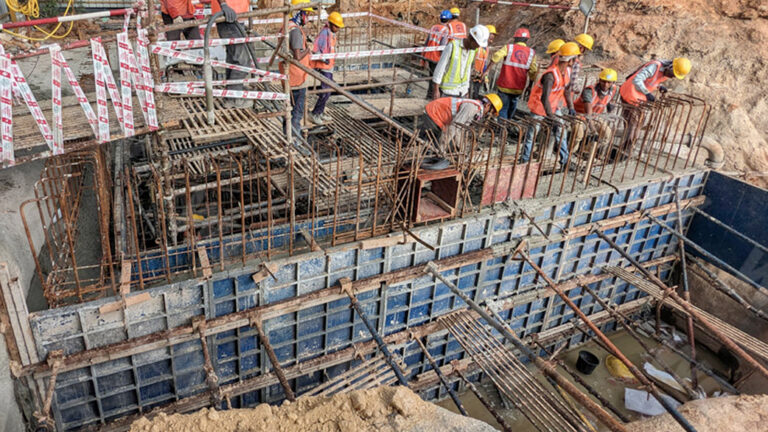
Repetition is where construction reveals the truth about materials.
The first slab always looks good. The first column always feels solid. The first pour gives confidence. It is the tenth slab, the twentieth column, the fiftieth repetition that exposes weaknesses.
Repetitive construction work is unforgiving. Residential towers, commercial complexes, industrial sheds, and infrastructure projects all rely on repeating the same structural elements again and again. In such projects, the choice of formwork materials is not just a technical decision. It is a financial and operational one.
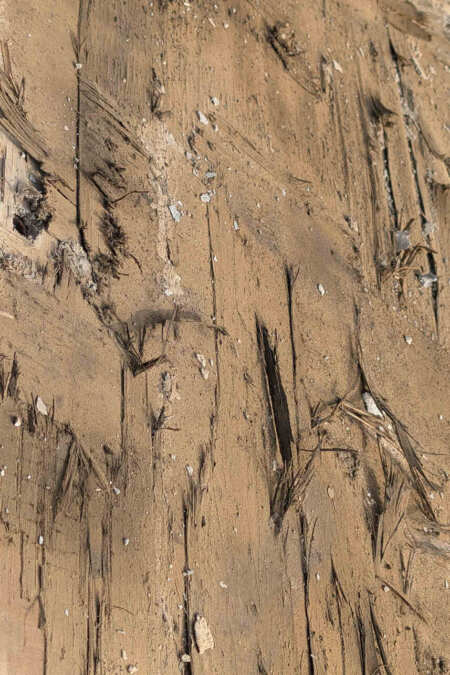
If the material cannot handle repetition, the project starts bleeding money quietly.
Let us explore how to choose the right formwork boards, formwork sheets, and formwork panels for repetitive construction work. And more importantly, why plastic formwork solutions like WoWBoards by WoWMaterials are redefining what reliable repetition actually means.
Why Repetitive Construction Changes the Game
In one-time construction, material fatigue is less visible. You use the board once or twice and move on. In repetitive construction, every weakness multiplies.
If a plyboard for formwork swells slightly after five uses, that swelling repeats across dozens of slabs. If alignment shifts by a few millimetres, that error compounds. If surface finish deteriorates, rework increases every cycle.
Repetition magnifies small flaws into large inefficiencies.
This is why repetitive projects demand materials that remain consistent across cycles, not just impressive on the first use.
The Core Criteria for Choosing Formwork Materials
When selecting formwork materials for repetitive work, builders should focus on six critical parameters:
- Dimensional stability
- Load-bearing capacity
- Surface finish retention
- Reusability
- Ease of handling
- Cost per use
Let us examine each one in context.
Dimensional Stability: The Foundation of Accuracy
In repetitive construction, precision matters. Column alignment must remain true across floors. Slab thickness must remain consistent.
Traditional formwork plywood is made of wood veneers. Wood reacts to moisture. Even if labelled as water-resistant, it absorbs moisture through edges and fasteners. Over time, swelling and warping occur.
In early cycles, these changes may be minor. By the tenth or twentieth repetition, alignment errors become visible.
Plastic-based formwork boards like WoWBoards do not absorb water. They maintain dimensional stability even after repeated exposure to curing water and humidity.
This stability ensures that repetition does not lead to deviation.
Load-Bearing Capacity Under Repetition
Concrete is heavy. Wet concrete is heavier. In repetitive work, the same formwork panels are subjected to load repeatedly.
With plywood, internal layers weaken over time due to moisture cycles and mechanical stress. The board that felt rigid in the beginning starts flexing slightly. Extra supports are added. Spacing is reduced. Labour increases.
WoWBoards are engineered plastic panels designed to retain strength over multiple cycles. They do not weaken internally because there are no layers to delaminate.
Consistency in strength ensures predictable performance across floors and phases.
Surface Finish Retention Across Cycles
The first pour with new formwork plywood often looks good. The second slightly less. By the sixth or seventh cycle, surface degradation becomes visible.
Concrete finish depends entirely on the quality of the mould. When the mould deteriorates, plastering and correction work increase.
Plastic formwork sheets maintain a smooth surface across many repetitions. Concrete does not adhere strongly to plastic, reducing the need for excessive release agents.
In repetitive construction, this translates into cleaner slabs and sharper columns with less rework.
Reusability: The Real Economic Indicator
The real cost of a plyboard for formwork is not its purchase price. It is the cost per use.
If a plywood board costs less but lasts ten cycles, and a plastic formwork panel costs more but lasts fifty cycles, the arithmetic becomes simple.
Repetitive construction rewards durability.
WoWBoards are known for high reuse cycles when handled properly. Contractors often report losing count of how many times a board has been used because performance remains consistent.
This is where long-term thinking beats short-term budgeting.
Ease of Handling and Site Practicality
In repetitive projects, boards are moved constantly. Dismantled, cleaned, stacked, reused.
Heavy, moisture-sensitive materials complicate logistics. Storage becomes an issue. Damaged boards accumulate quickly.
Plastic formwork panels tolerate outdoor storage. They do not swell when stacked on damp ground. They are easier to maintain between cycles.
In high-rise projects where time is money, such practical advantages matter.
Comparing Common Formwork Materials for Repetition
Formwork Plywood
Advantages:
- Familiar to labour teams
- Easily available
- Lower initial cost
Limitations:
- Moisture absorption
- Swelling and warping
- Limited reuse cycles
- Surface degradation
Steel Formwork
Advantages:
- High durability
- Excellent load capacity
Limitations:
- Heavy
- Expensive
- Requires handling equipment
- Corrosion concerns
Plastic Formwork Panels
Advantages:
- Moisture immunity
- Stable under repetition
- Lightweight compared to steel
- High reuse potential
Among plastic solutions, engineered systems like WoWBoards stand out because they are designed specifically for shuttering and repetitive construction.
Repetition in Column Formwork
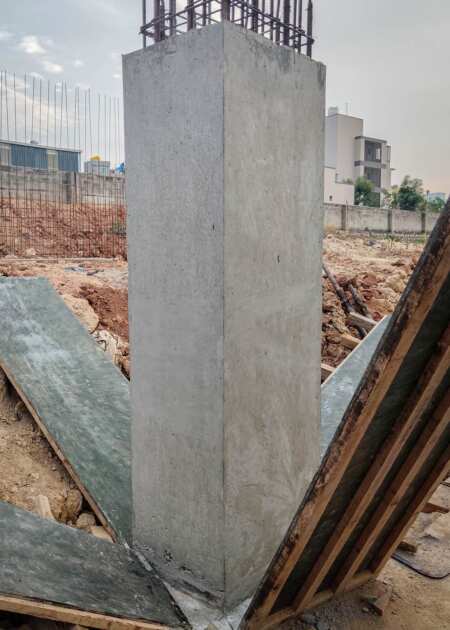
Formwork for column applications highlights material differences clearly.
Columns require precision. Even slight bulging or misalignment becomes visible across floors.
Plywood-based formwork often develops edge wear and dimensional changes, leading to inconsistent column sizes.
Plastic formwork panels maintain shape. Repeated column casting becomes more predictable. This consistency is especially valuable in multi-storey structures.
The Hidden Cost of Inconsistent Formwork
In repetitive construction, minor inconsistencies add up:
- Extra plastering
- Increased labour
- Delays in finishing
- Material wastage
- Alignment corrections
Each cycle compounds these issues.
Choosing stable formwork materials at the beginning prevents these recurring inefficiencies.
Sustainability in Repetitive Construction
Large repetitive projects consume enormous quantities of material.
Traditional plywood depends on timber resources and often ends up as waste after limited cycles.
Plastic formwork panels like WoWBoards are made from recycled plastic and can be recycled again after their lifecycle ends.
This reduces environmental impact while delivering superior performance.
In modern construction, sustainability is no longer optional. It is expected.
Why Builders Are Shifting to Plastic Formwork Panels
Builders working on repetitive projects are increasingly choosing plastic formwork for three main reasons:
- Predictability
- Durability
- Cost efficiency over time
WoWBoards combine these three advantages effectively.
They do not rely on coatings or glue strength. They do not degrade silently under moisture. They do not surprise you mid-project.
They simply repeat performance, cycle after cycle.
Repetition Is a Test of Material Integrity
In construction, repetition is not just about building faster. It is about building consistently.
Materials that cannot handle repetition create friction. Materials that thrive under repetition create momentum.
When selecting formwork boards, formwork sheets, or formwork panels, the question should not be which is cheapest today. The question should be which remains stable after fifty cycles.
That question leads naturally toward engineered plastic formwork solutions.
Conclusion: Choose Materials That Respect Repetition
Repetitive construction demands materials that do not change character over time.
Formwork plywood may work for limited cycles. In high-repetition environments, its weaknesses become expensive.
Plastic formwork panels like WoWBoards by WoWMaterials are designed for repetition. They maintain dimensional stability, retain surface finish, withstand moisture, and offer high reuse potential.
In repetitive construction, consistency is currency.
Choose materials that earn that consistency.
Build Repetition With Confidence Using WoWBoards
If your project involves repetitive slabs, beams, or columns, it is time to choose formwork that matches the scale of your ambition.
Upgrade to WoWBoards formwork panels by WoWMaterials.
More repetitions. Better finish. Lower cost per cycle.
Repetition should strengthen your project, not weaken your materials.