
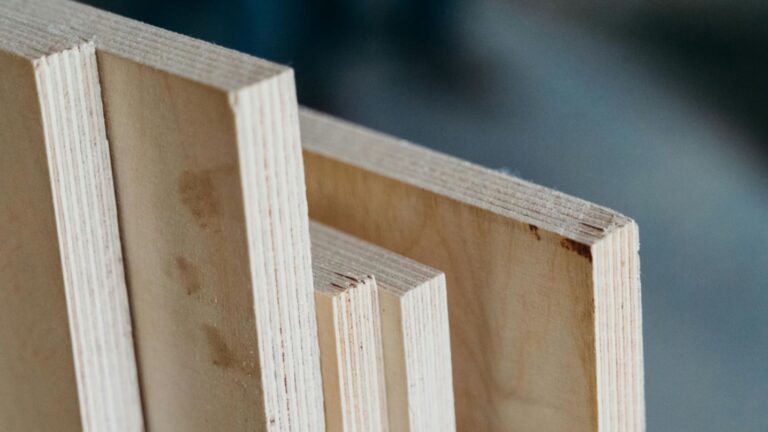
Every construction site has a familiar moment. The shuttering is removed. Everyone waits. And then someone says, half surprised and half resigned, “This ply is already gone.”
It is not anger. It is not a shock. It is acceptance. Because early failure of ply boards in shuttering work has become so common that many sites treat it as normal.
But normal does not mean unavoidable.
The truth is simple. Ply for shuttering fails early not because workers mishandle it, not because concrete is too harsh, and not because curing water is excessive. It fails because plywood is being asked to do a job it was never designed to do.
Let us look closely at the most common reasons shuttering ply boards fail early, even when they are sold as waterproof, premium, or construction grade. And then let us look at why plastic shuttering boards like WoWBoards solve these problems at the root.
Reason 1: Water Finds a Way In, Always
Many ply boards are sold as waterproof ply sheet. The word waterproof creates confidence. But on site, water does not behave politely.
Water enters from:
- Cut edges
- Nail and screw holes
- Surface scratches
- Joints between sheets
Once water enters plywood, the process is irreversible. Wood absorbs moisture. It swells. It changes shape. Glue may hold the layers together, but the wood itself expands.
In shuttering work, curing water flows continuously. Even a small amount of swelling is enough to disturb alignment. Concrete follows the mould, not the intention.
This is why ply boards that look fine on day one start showing problems after just a few pours.
Why Plastic Boards Do Not Have This Problem
A plastic ply board does not absorb water. There are no fibres to swell. No pores to fill. No internal damage.
Plastic shuttering boards remain the same size and shape regardless of how much water they see.
Reason 2: Delamination Starts Before You Notice It
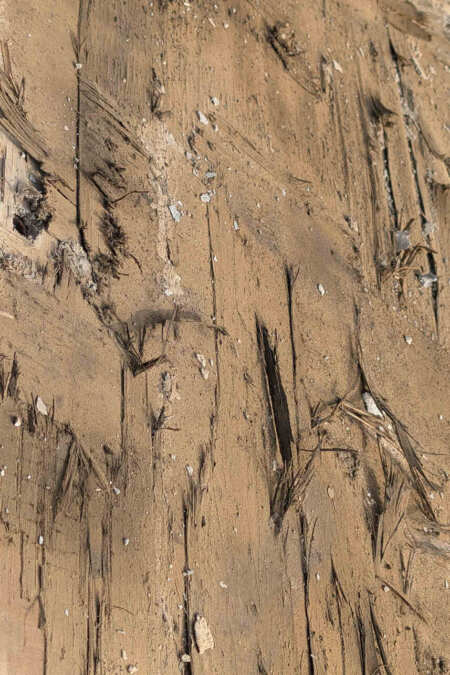
Plywood is layered. Veneers are bonded using adhesive. Over repeated wetting and drying cycles, those layers begin to separate.
Delamination often starts at the edges and corners. By the time it is visible, the board has already lost strength.
A delaminated shuttering ply board becomes unpredictable under load. It may hold today and fail tomorrow. That uncertainty is dangerous in shuttering work.
Why Plastic Shuttering Boards Are Different
Plastic boards are solid. There are no layers. No glue lines. Nothing to peel apart.
With plastic shuttering boards, delamination is simply not possible.
Reason 3: Loss of Strength After Repeated Use
A ply board does not fail suddenly. It weakens quietly.
Each pour introduces moisture. Each curing cycle stresses the wood. Each demoulding chips edges and damages the surface.
By the fifth or sixth use, many ply boards are already compromised. They flex more. They sag under concrete pressure. They require extra props.
This is often when sites start compensating instead of replacing. More supports. Tighter spacing. Extra labour.
Why Plastic Boards Retain Strength
A plastic ply board retains its structural integrity across repeated uses. Moisture does not weaken it. Concrete pressure does not fatigue it in the same way.
Plastic shuttering boards maintain predictable strength, which allows engineers to design formwork systems with confidence.
Reason 4: Edge Damage That Quickly Spreads
Edges are the weakest part of any ply board.
During cutting, handling, and fixing, edges take the most abuse. Once edges are damaged, water enters faster. Swelling accelerates. Delamination spreads inward.
This is why even expensive plywood often fails from the edges first.
Why Plastic Boards Handle Edges Better
Plastic shuttering boards do not have vulnerable grain at the edges. Even if the edge is scratched or chipped, it does not absorb water or trigger internal damage.
This dramatically slows down failure and extends usable life.
Reason 5: Inconsistent Surface Finish Over Time
Plywood often delivers a decent concrete finish initially. Then the surface starts changing.
Film wears off. Wood fibres get exposed. Small dents and scratches appear. Concrete begins to pick up these imperfections.
This leads to:
- Rough patches
- Extra plastering
- Surface corrections
- Increased finishing cost
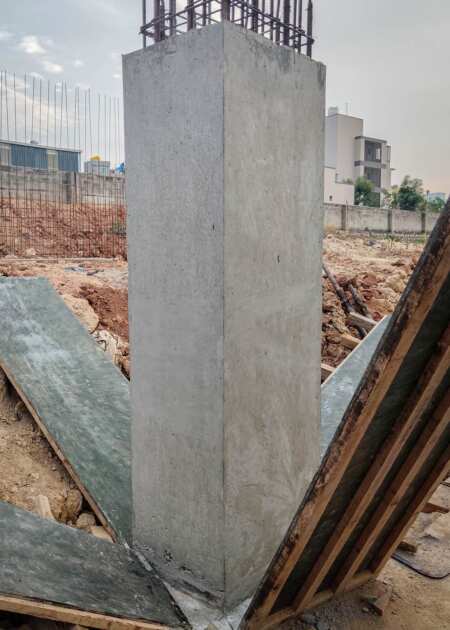
Concrete remembers the mould. If the mould is tired, the finish looks tired.
Why Plastic Boards Deliver Consistency
Plastic shuttering boards have a uniform surface throughout. There is no film to peel. No fibres to expose.
Concrete does not stick easily to plastic. Demoulding is clean. The finish remains consistent across many pours.
Reason 6: Sensitivity to Storage Conditions
Ply boards need ideal storage conditions. Dry ground. Covered area. Proper stacking.
On most construction sites, ideal conditions do not exist.
Boards are stacked on damp soil. Exposed to rain. Left overnight in humid air. Damage begins even before use.
Why Plastic Boards Simplify Storage
Plastic shuttering boards tolerate moisture. They can be stored outdoors without fear of swelling or damage.
This flexibility makes site logistics easier and reduces pre use rejection.
Reason 7: Termite and Biological Damage
Wood attracts termites. Construction sites often sit close to soil, vegetation, and moisture. This is a perfect environment for biological damage.
A termite attacked shuttering ply board loses strength internally. The damage is often invisible until failure occurs.
Why Plastic Boards Eliminate This Risk
Termites do not eat plastic. Plastic shuttering boards are naturally termite resistant.
This removes an entire category of risk from shuttering work.
Reason 8: Misplaced Trust in the Word Waterproof
Many failures start with overconfidence.
When a board is sold as waterproof, sites assume it can handle anything. Extra care reduces. Storage becomes casual. Reuse increases beyond safe limits.
The reality is that no plywood is truly waterproof in construction conditions.
Why Plastic Boards Are Actually Waterproof
Plastic is inherently waterproof. Not resistant. Not treated. Naturally waterproof.
This fundamental difference is why plastic shuttering boards outperform plywood so consistently.
The Hidden Cost of Early Ply Failure
Early failure of ply boards does not only mean replacing boards.
It means:
- Rework
- Extra plastering
- Labour time
- Delays
- Material wastage
These costs rarely show up on a single invoice, but they accumulate across a project.
This is where many contractors realise that cheap plywood is not cheap at all.
Why Plastic Shuttering Boards Like WoWBoards Change the Equation
WoWBoards are engineered plastic shuttering boards made for construction environments.
They:
- Do not absorb water
- Do not delaminate
- Retain strength over many uses
- Deliver consistent surface finish
- Resist termites
- Tolerate site storage conditions
They are not a coated version of plywood. They are a different material altogether.
This is why contractors who switch often stop counting how many times a board has been used. Performance remains predictable.
From Managing Failure to Eliminating It
Most sites manage plywood failure. They do not eliminate it.
They expect swelling. They expect replacement. They expect rework.
Plastic shuttering boards change this mindset. Instead of managing failure, they remove the causes of failure.
That shift is powerful.
Conclusion: Ply Boards Fail Early Because They Are Not Built for Shuttering
Early failure of ply boards in shuttering work is not bad luck. It is a material mismatch.
Plywood is wood. Shuttering is wet, demanding, and repetitive. The two do not belong together.
Plastic shuttering boards, especially WoWBoards, are built for this environment.
They do not fight water. They ignore it.
They do not weaken over time. They stay consistent.
That is why they last longer. That is why they cost less over time. That is why they deliver better concrete finish.
Stop Replacing Ply Boards. Start Using WoWBoards
If you are tired of seeing ply boards fail early in shuttering work, it may be time to upgrade.
Choose WoWBoards, the plastic shuttering boards designed for real construction conditions.
Fewer failures. Better finish. Longer life.
Your site will feel the difference.