
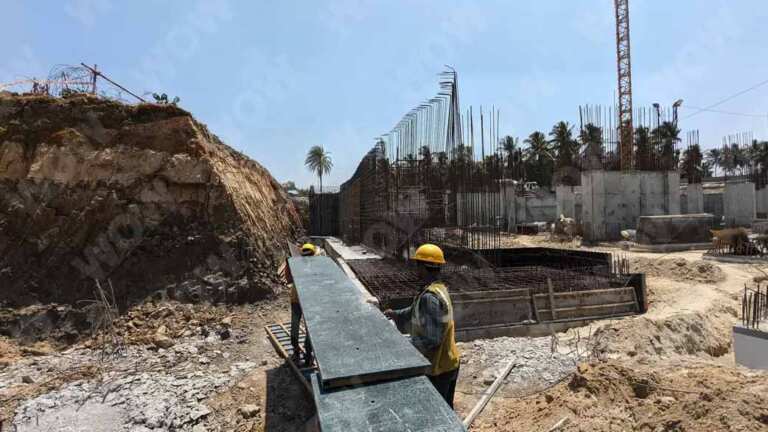
Every construction site eventually reaches a moment where someone looks at a stack of boards and asks a deceptively simple question.
“Should we use this?”
For years, the answer was automatic. MR plywood. Not because it was perfect, but because it was familiar. Everyone knew how it behaved. Everyone knew how it failed. And everyone had built workarounds for those failures.
Then came PVC sheets and PVC boards, entering the site quietly, promising freedom from swelling, moisture damage, and termite trouble. Plastic felt like progress. And in many ways, it was.
But as more builders experimented with PVC in real projects, a more nuanced understanding emerged. PVC sheets can help. But they are not all-purpose heroes. And when it comes to shuttering and formwork, not all plastic is created equal.
Let us take a clear, honest look at where PVC sheets work in construction, how thickness changes performance, where limitations appear, and why plastic shuttering sheets like WoWBoards have become the smarter choice for serious construction work.
Why PVC Sheets Found a Place in Construction
PVC sheets entered construction as a response to plywood fatigue.
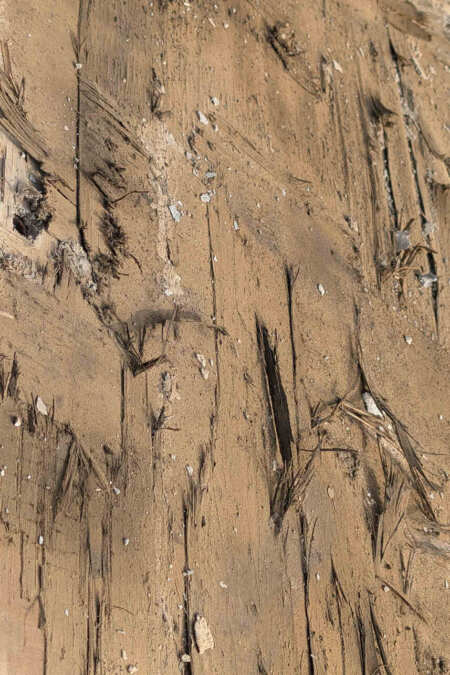
MR plywood absorbs moisture.
It swells during curing.
It loses shape.
It needs frequent replacement.
Plastic, on the other hand, does not absorb water. Termites do not touch it. This alone made PVC boards attractive as a board for construction, especially in regions with heavy rain or high humidity.
As a plastic sheet for construction, PVC offered three immediate advantages over wood:
- Water resistance
- Termite resistance
- Better dimensional stability
For many builders, that was enough reason to try.
Common Uses of PVC Sheets on Construction Sites
PVC sheets are versatile, but only when used for the right purpose.
1. Interior Applications
PVC sheets work well for wall panels, false ceilings, and interior partitions. These areas are dry, protected, and do not face structural loads.
2. Temporary Structures
Site offices, storage enclosures, and safety barriers often use PVC boards because they are lightweight and easy to install.
3. Cladding and Finishing Work
PVC boards are popular where aesthetics matter more than load bearing strength.
4. Light Construction Applications
Some sites use PVC sheets for light formwork where concrete pressure is minimal and reuse cycles are low.
In these scenarios, PVC performs reliably and often better than MR plywood.
Understanding Thickness Options in PVC Sheets
Thickness is where PVC performance changes significantly.
Thin PVC Sheets
These are flexible and easy to cut. They are ideal for cladding and partitions but unsuitable for shuttering. Under concrete pressure, they flex too much.
Medium Thickness PVC Boards
These offer better rigidity and are sometimes used for side shuttering or light formwork. However, performance depends heavily on support spacing and quality of the board.
Thick PVC Sheets
Thicker PVC boards are stronger and more rigid. But thickness alone does not guarantee suitability for shuttering. Many thick PVC boards are still designed for non structural use.
This is where confusion often arises. Builders assume thicker plastic automatically means better shuttering. On site, that assumption can lead to bending, misalignment, or poor finish.
The Limitations of PVC Sheets in Shuttering Work
PVC sheets solve some plywood problems, but not all.
1. Load Bearing Challenges
Most PVC sheets are not engineered for the hydrostatic pressure of wet concrete. Under slab or beam loads, they may flex or deform if not adequately supported.
2. Inconsistent Quality
PVC boards vary widely by manufacturer. Two sheets with the same thickness can behave very differently under load.
3. Surface Durability
Repeated use, vibration, and handling can leave surface marks on PVC sheets, which then reflect on the concrete finish.
4. Limited Reuse Cycles
Many PVC sheets are designed for static applications. Repeated assembly and disassembly reduces their lifespan.
Because of these limitations, PVC sheets are often a step forward from MR plywood, but not the final answer for shuttering.
Why Plastic Formwork Is a Different Conversation
This is the key distinction many sites miss.
PVC sheets are plastic.
Plastic formwork is engineered plastic.
Plastic formwork boards are designed specifically for:
- Holding wet concrete
- Maintaining shape under pressure
- Delivering consistent surface finish
- Surviving multiple reuse cycles
Generic PVC boards were never designed with these requirements in mind.
This is where plastic shuttering sheets like WoWBoards stand apart.
What Makes WoWBoards Different From Regular PVC Sheets
WoWBoards are not decorative PVC boards repurposed for site use. They are purpose built plastic shuttering sheets made from recycled plastic, engineered for construction environments.
1. Engineered Strength
WoWBoards are designed to handle concrete loads without unpredictable bending. When used with proper supports, they maintain alignment reliably.
2. Dimensional Stability
Unlike MR plywood and many PVC sheets, WoWBoards do not change shape with moisture, heat, or repeated use.
3. Consistent Surface Finish
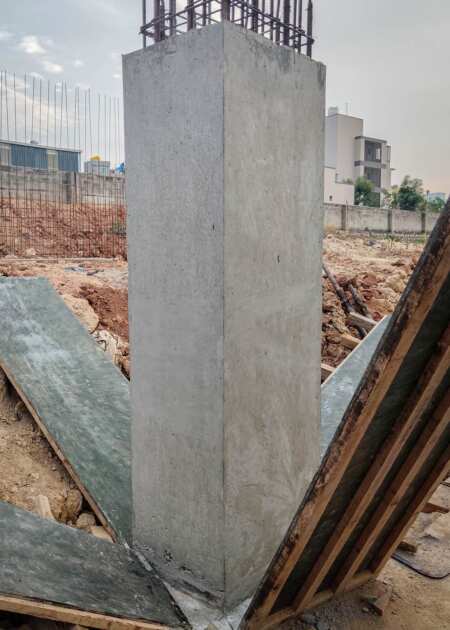
The surface remains smooth across multiple pours. Concrete does not stick easily, reducing the need for release agents and surface corrections.
4. High Reusability
WoWBoards are built for repetition. Contractors often stop counting how many times they have used a board because performance stays consistent.
5. Sustainability
WoWBoards are made from recycled plastic. Waste plastic becomes durable plastic plywood, reducing deforestation and landfill waste.
PVC Sheets vs Plastic Shuttering Sheets in Real Conditions
Let us compare behaviour, not promises.
MR plywood absorbs water and swells.
PVC sheets resist water but may flex.
Plastic shuttering sheets resist water and hold load.
MR plywood degrades with each pour.
PVC sheets vary in durability.
WoWBoards maintain performance over many cycles.
MR plywood needs careful storage.
PVC sheets tolerate moisture.
WoWBoards thrive on site conditions.
This is why builders who experiment eventually move to engineered plastic shuttering systems.
The Cost Question That Decides Everything
PVC sheets often cost more than MR plywood. Plastic shuttering sheets cost more than generic PVC boards.
At first glance, the cheaper option feels safer.
But construction economics are about cost per use.
MR plywood fails early.
PVC sheets fail inconsistently.
WoWBoards last long.
When replacement, rework, plastering, and finish corrections are included, plastic shuttering sheets often turn out to be the most economical choice.
This is where Tim Urban logic applies. The upfront price looks important. The long term spreadsheet tells the truth.
Common Mistakes Builders Make With PVC Sheets
The biggest mistake is assuming all plastic behaves the same.
Using interior grade PVC sheets for shuttering is risky. They were never designed for concrete pressure.
The material is not the problem. The application is.
Choosing plastic boards designed specifically for formwork makes all the difference.
Why Builders Eventually Choose WoWBoards
Builders rarely switch materials overnight. They test.
One slab.
One beam.
One section.
They notice cleaner demoulding, better finish, fewer rejected boards, and less rework.
Slowly, MR plywood and generic PVC sheets start feeling like compromises.
Plastic shuttering sheets feel like control.
Conclusion: PVC Sheets Are Progress, Plastic Shuttering Is the Solution
PVC sheets improved construction by solving plywood’s biggest weakness. Water.
But shuttering demands more than moisture resistance. It demands load capacity, stability, and repeatability.
That is where plastic shuttering sheets like WoWBoards stand apart.
They combine the advantages of plastic with engineering built for formwork.
They are not a temporary fix. They are the next step.
Upgrade From PVC Sheets to WoWBoards
If you are using PVC sheets for shuttering and still facing limitations, it may be time to upgrade.
Choose WoWBoards, the plastic shuttering sheets engineered for real construction conditions.
Better finish. Longer life. Fewer failures.
Your site will feel the difference.