
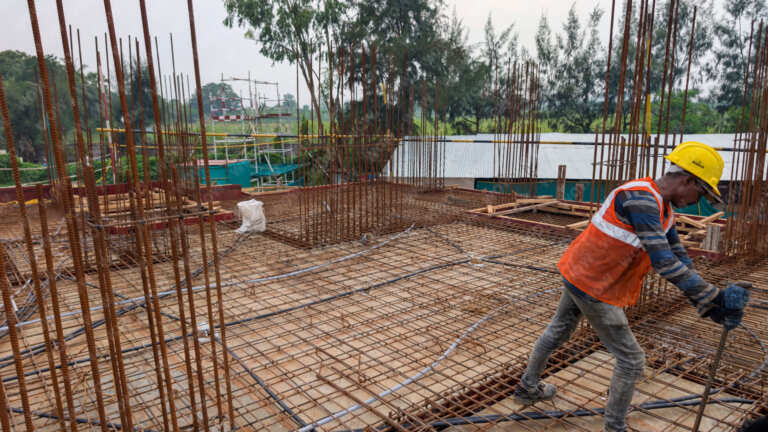
Every construction project eventually comes down to a few important decisions. Some are about design. Some are about timelines. And some are about materials that quietly decide whether the project will run smoothly or become a daily struggle.
One such decision involves choosing between waterproof plywood and plastic shuttering boards for formwork.
At first glance, waterproof plywood sounds like the obvious choice. It has been used for years. It is available everywhere. And the word waterproof itself feels reassuring. But construction sites rarely behave like product brochures. Real conditions reveal the true durability of materials.
When builders compare water proof plywood, shuttering plywood, and modern plastic shuttering boards, the question that matters most is simple. Which material actually lasts longer and performs consistently on site?
Let us look at the answer from the perspective of durability, performance, and long term cost.
Understanding Waterproof Plywood in Construction
Before comparing materials, it is important to understand what waterproof plywood actually means.
Most waterproof plywood is made from thin layers of wood veneers bonded with adhesive. The adhesive used may be water resistant or waterproof. This improves the board’s ability to resist moisture.
However, the wood layers themselves still absorb water.
This distinction is important. The glue may resist water, but the wood fibres inside the board expand when they absorb moisture.
That is why even premium waterproof ply board can swell, warp, or lose strength after repeated exposure to curing water and humidity.
The word waterproof often refers to the bonding technology rather than complete resistance to moisture.
The Reality of Waterproof Plywood on Construction Sites
Construction sites are demanding environments.
Concrete curing requires continuous water exposure. Rain and humidity add to the challenge. Boards are stacked outdoors and handled repeatedly.
In these conditions, shuttering plywood faces several problems over time.
Swelling and Warping
Water enters plywood through edges, nail holes, and small surface cracks. Once moisture reaches the wood fibres, swelling begins.
Even minor swelling can affect alignment and lead to uneven slab surfaces.
Delamination
Over repeated cycles of wetting and drying, the adhesive bond between layers weakens. This causes delamination, where layers begin separating.
A delaminated shuttering board loses structural strength and becomes unreliable for load bearing applications.
Reduced Load Capacity
Moisture exposure reduces the stiffness of plywood. Boards that were initially strong may start bending slightly under the weight of wet concrete.
To compensate, additional supports are often installed, increasing labour and material costs.
Surface Degradation
The surface film on waterproof plywood gradually wears out. Concrete starts sticking to exposed wood fibres, affecting finish quality.
These issues become more visible in projects involving repetitive use of formwork panels.
Understanding Plastic Shuttering Boards
Plastic shuttering boards represent a different approach to formwork materials.
Instead of relying on wood veneers and adhesive layers, plastic boards are made from solid plastic material engineered for construction applications.
Because plastic does not absorb water, many of the problems associated with plywood simply do not occur.
This fundamental difference changes how the material behaves in real site conditions.
Durability Comparison: Waterproof Plywood vs Plastic Shuttering Boards
Durability in formwork depends on several factors.
Resistance to Moisture
Plywood resists moisture to an extent but still absorbs water through exposed edges and holes.
Plastic shuttering boards do not absorb water. Rain, humidity, and curing water have no effect on their shape or strength.
Structural Stability
With plywood, repeated moisture exposure leads to swelling and warping.
Plastic boards maintain dimensional stability even after repeated use.
Reusability
The number of reuse cycles is one of the most important measures of durability.
Shuttering plywood may last several cycles depending on site conditions, but its performance gradually declines.
Plastic shuttering boards often last significantly longer because they are not affected by moisture or internal delamination.
Surface Finish
The surface quality of plywood deteriorates as its protective layer wears away.
Plastic boards maintain a smooth surface, resulting in better concrete finish over time.
Cost Considerations Beyond Purchase Price
Builders often compare materials based on purchase price.
When looking at water proof ply price or waterproof plywood price, plywood may initially appear more economical.
However, the true cost of formwork material is determined by cost per use.
If plywood lasts ten cycles and plastic boards last many more cycles, the overall cost calculation changes significantly.
Frequent replacement, additional labour, and surface correction work add to the real cost of plywood based systems.
Plastic shuttering boards reduce these hidden costs by maintaining durability over longer periods.
Performance in Repetitive Construction Projects
In projects where formwork is reused many times, durability becomes even more critical.
Residential towers, commercial buildings, and infrastructure projects often require repeated slab and column casting.
With plywood, each cycle gradually weakens the board. With plastic boards, performance remains more consistent.
This consistency helps maintain uniform slab thickness, better column alignment, and improved concrete finish.
Project teams benefit from predictable performance rather than dealing with gradual material degradation.
Environmental Considerations
Another aspect influencing material selection today is sustainability.
Traditional shuttering plywood relies on timber resources. After several cycles of use, damaged boards often become construction waste.
Plastic shuttering boards like WoWBoards by WoWMaterials are manufactured using recycled plastic materials. At the end of their lifecycle, they can also be recycled again.
This reduces environmental impact while improving durability.
For projects aiming to adopt sustainable practices, plastic formwork materials offer clear advantages.
Why WoWBoards Are a Preferred Plastic Shuttering Solution
Among plastic shuttering systems, WoWBoards by WoWMaterials have gained attention for their durability and engineering.
WoWBoards are designed specifically for formwork applications rather than general plastic sheet use.
High Durability
Because they are made from solid plastic material, they do not suffer from delamination or swelling.
Consistent Load Performance
WoWBoards maintain structural strength across repeated cycles of use, making them suitable for demanding RCC projects.
Improved Concrete Finish
The smooth plastic surface allows concrete to release easily, reducing surface defects and finishing work.
Long Reuse Life
Contractors using WoWBoards often report higher reuse cycles compared to traditional shuttering boards made from plywood.
Practical Benefits for Contractors
From a contractor’s perspective, durable materials simplify site operations.
Plastic shuttering boards reduce the need for constant inspection and replacement of damaged plywood.
Storage becomes easier because plastic boards are not affected by damp ground or rain.
Over time, the predictability of performance helps project teams plan more efficiently.
Choosing Durability Over Habit
For many years, plywood dominated the shuttering industry because it was the most practical option available.
Today, builders have alternatives that offer better resistance to moisture, longer lifespan, and improved performance.
Choosing between waterproof plywood and plastic shuttering boards is no longer just about tradition. It is about selecting the material that performs best under real construction conditions.
Durability is not defined by labels or marketing claims. It is defined by how well a material survives the daily stress of a construction site.
Conclusion: The Future of Durable Shuttering
Waterproof plywood has served the construction industry for decades. It remains a familiar material for many projects.
However, its vulnerability to moisture, swelling, and gradual loss of strength limits its durability in demanding environments.
Plastic shuttering boards represent a more stable and long lasting alternative.
Among these solutions, WoWBoards by WoWMaterials stand out for their ability to maintain shape, strength, and surface quality across multiple cycles.
For builders seeking durability, consistency, and improved cost efficiency, plastic formwork panels are becoming the logical choice.
Build With Confidence Using WoWBoards
If your project requires reliable shuttering materials that can withstand moisture, repeated use, and heavy RCC loads, it may be time to rethink traditional plywood.
Choose WoWBoards plastic shuttering panels by WoWMaterials.
They offer greater durability, consistent performance, and long term value.
Better formwork leads to better concrete. And better concrete builds better structures.