
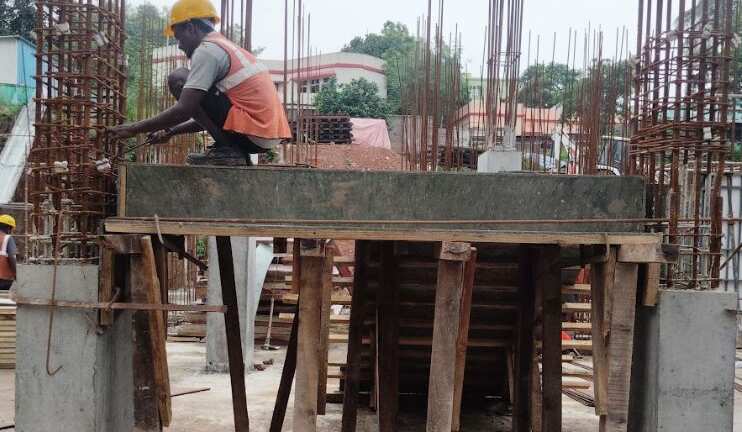
Construction sites often run on assumptions. One of the most common assumptions sounds reassuring: if a board is labelled waterproof plywood, then it should survive anything that happens on site. Rain, curing water, rough handling, stacking outdoors. It should manage it all.
But every experienced contractor knows that reality is different.
Even the best water proof plywood demands careful handling. Without proper storage, installation, and maintenance, its performance drops quickly. That is why many builders who invest in good quality plywood still see swelling, warping, and surface damage after just a few cycles.
Understanding why shuttering plywood still needs careful site handling helps explain a deeper truth. Waterproof plywood is not immune to construction conditions. It is only resistant to them.
Let us look at how site practices affect plywood performance and why more builders today are moving toward plastic shuttering boards like WoWBoards by WoWMaterials, which reduce many of these handling challenges.
The Meaning of Waterproof in Waterproof Plywood
The first misunderstanding begins with the word waterproof itself.
In most cases, waterproof plywood refers to the adhesive used between wood layers. The glue resists moisture better than standard plywood adhesives. However, the core of the board is still made from wood.
Wood fibres naturally absorb moisture. When they absorb water, they expand. That expansion leads to swelling, warping, and dimensional changes.
This means that even a high quality waterproof ply board will react to prolonged moisture exposure if it is not handled properly.
The label improves durability, but it does not eliminate the need for careful use.
Why Construction Sites Are Tough on Plywood
Construction environments are very different from indoor environments where plywood is commonly used.
On site, boards face a combination of challenges.
Concrete curing requires water.
Rain and humidity increase moisture exposure.
Boards are stacked outdoors.
Workers frequently cut, nail, and dismantle them.
Every one of these activities exposes the wood layers to moisture or physical damage.
If shuttering boards are not handled carefully, water finds its way into the board through small openings. Over time, this causes visible deterioration.
Common Handling Mistakes That Damage Waterproof Plywood
Even when builders purchase good quality plywood at a competitive water proof ply price, improper site practices can shorten its life dramatically.
Storing Boards Directly on the Ground
Many sites stack plywood sheets directly on soil or concrete floors. During rainy periods or curing cycles, the ground remains damp.
Wood absorbs moisture through direct contact. Boards placed on damp surfaces can absorb water even before they are used in shuttering.
Proper storage requires raised platforms or pallets to keep boards away from moisture.
Leaving Boards Exposed to Rain
While plywood can resist some moisture, continuous rain exposure accelerates swelling.
On busy construction sites, boards may be left uncovered overnight. By morning, they have already absorbed moisture.
Covering stacks with protective sheets helps reduce this exposure.
Ignoring Edge Protection
The edges of plywood are the most vulnerable areas.
During cutting, the protective film is removed and wood fibres are exposed. These edges absorb water quickly.
If edge sealing is ignored, swelling often starts from the corners and spreads inward.
Excessive Nail Holes
Each nail or screw hole creates a small opening for water to enter the board.
Repeated cycles of nailing and dismantling increase these openings. Moisture enters and weakens the internal layers.
Over time, the structural integrity of the shuttering plywood declines.
Rough Handling During Dismantling
When boards are pried loose with force, small cracks and chips appear.
These damages expose raw wood surfaces. Water penetrates easily during the next use.
Even high quality boards deteriorate quickly under such handling.
The Impact of Improper Handling
Improper handling does more than just shorten the life of plywood.
It also affects the quality of the structure being built.
Swollen boards can lead to uneven slab surfaces. Warped panels can cause misaligned columns. Surface degradation results in rough concrete finish that requires additional plastering.
These problems increase labour, delay finishing work, and raise overall project costs.
Even if the waterproof plywood price seemed reasonable at purchase, the hidden cost of rework and replacement can be significant.
Why Proper Handling Still Has Limits
Even with perfect storage and careful handling, plywood remains a wood based material.
Repeated cycles of moisture exposure, concrete pressure, and vibration gradually weaken the internal structure.
This means there is always a practical limit to how many times shuttering boards made from plywood can be reused.
Once that limit is reached, replacement becomes necessary.
In projects involving repetitive construction such as high rise buildings, this limitation becomes a major operational challenge.
The Emergence of Plastic Shuttering as an Alternative
To address these challenges, many builders have begun exploring plastic shuttering systems.
Plastic formwork materials behave differently from wood. They do not absorb water. They do not swell when exposed to curing water or rain.
Because of this, plastic boards are less dependent on perfect storage and handling conditions.
Even when stored outdoors or used repeatedly in wet environments, their dimensional stability remains consistent.
How WoWBoards Simplify Site Handling
WoWBoards by WoWMaterials are engineered plastic formwork panels designed specifically for construction environments.
Unlike plywood, they are not made from layered wood veneers. They are solid plastic panels created from recycled plastic materials.
This design offers several advantages.
Resistance to Moisture
WoWBoards do not absorb water. Rain, humidity, and curing water do not affect their shape.
Reduced Sensitivity to Storage Conditions
Because plastic does not swell, boards can be stored on site without the same level of protection required for plywood.
Consistent Structural Performance
Plastic formwork panels maintain strength across repeated cycles. They do not weaken due to moisture exposure.
Better Concrete Finish
The smooth plastic surface allows concrete to release easily, reducing surface defects.
Longer Reuse Life
Contractors often report significantly higher reuse cycles with WoWBoards compared to traditional shuttering plywood.
Why Handling Efficiency Matters for Contractors
Contractors manage dozens of activities simultaneously on site. Materials that require constant protection and careful handling add complexity.
When boards demand strict storage conditions and delicate handling, site operations slow down.
Plastic shuttering boards simplify these challenges. They reduce the risk of accidental damage and make material management easier.
This efficiency translates into faster construction cycles and lower labour costs.
The Cost Perspective
Builders often compare materials using initial purchase price.
When comparing water proof ply price and plastic shuttering systems, plywood may appear cheaper.
However, cost per use tells a different story.
Plywood requires careful handling and still has limited reuse cycles. Plastic boards last longer and require less maintenance.
When replacement frequency, labour savings, and improved finish are considered, plastic shuttering panels often become more economical.
Choosing Materials That Match Site Reality
Construction sites are unpredictable environments.
Rain can arrive suddenly. Workers handle materials quickly. Storage conditions change daily.
Materials that require perfect handling conditions struggle to survive in such environments.
Plastic shuttering boards are designed to match the realities of construction work rather than ideal storage conditions.
This is why many builders are gradually transitioning from plywood to engineered plastic formwork panels.
Conclusion: Handling Helps, But Material Choice Matters More
Proper handling of waterproof plywood is important. It extends the life of the board and improves performance.
But handling alone cannot eliminate the fundamental limitations of wood based formwork.
Moisture exposure, repeated use, and construction stresses will eventually degrade plywood.
Plastic shuttering boards offer a more resilient alternative.
WoWBoards by WoWMaterials provide durability, moisture resistance, and consistent performance with less dependence on careful site handling.
For builders seeking reliability and long term efficiency, the shift toward plastic formwork panels is becoming increasingly logical.
Build Smarter With WoWBoards
If your project depends on reliable shuttering materials that can withstand demanding site conditions, consider upgrading to WoWBoards plastic formwork panels by WoWMaterials.
They reduce handling concerns, improve durability, and deliver consistent results across repeated cycles.
Better materials make better construction possible. And better construction starts with the right formwork choice.