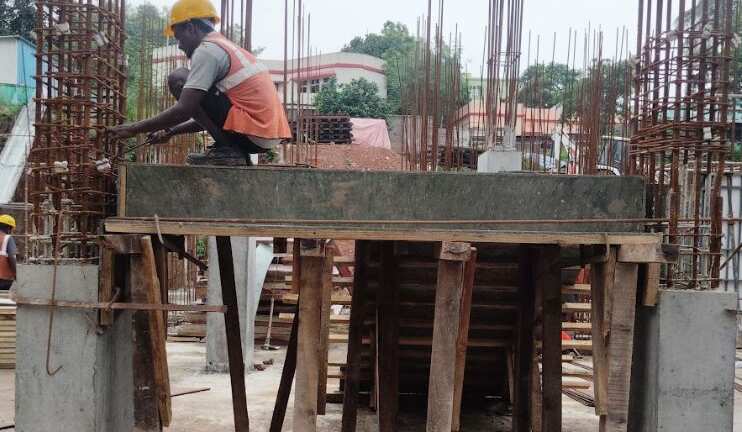
Every construction site has a familiar rhythm. Steel goes up. Shuttering comes in. Concrete is poured. Water flows for curing. And somewhere between the second and third pour, someone sighs and says, “This board is already gone.”
More often than not, that board is MR plywood.
MR plywood has been part of Indian construction for decades. Not because it is perfect, but because it is familiar. Builders know it. Workers understand it. Suppliers stock it everywhere. Over time, the industry learned to live with its problems instead of questioning them.
But as timelines tighten, margins shrink, and finish expectations rise, those problems are no longer small irritations. They are real costs.
Let us look closely at the most common construction problems caused by MR plywood and how PVC boards, and more importantly plastic shuttering sheets like WoWBoards, solve them in a far more reliable way.
Problem 1: Swelling That Ruins Alignment
This is the most visible and most common issue.
MR plywood absorbs moisture. It does not matter how good the glue is. The wood layers still soak in water through edges, nail holes, and surface scratches.
On a shuttering site, water is unavoidable. Curing water flows continuously. Rain adds to it. Damp soil beneath stacked boards makes it worse.
The result is swelling.
Even a few millimetres of swelling is enough to disturb shuttering alignment. Concrete follows the mould. The slab surface comes out uneven. Beam edges lose sharpness. Columns look slightly off.
How PVC Boards Solve This
PVC boards and PVC sheets do not absorb water. As a plastic sheet for construction, PVC remains dimensionally stable even in wet conditions.
No swelling means alignment stays intact. Concrete comes out closer to design intent.
How WoWBoards Go Further
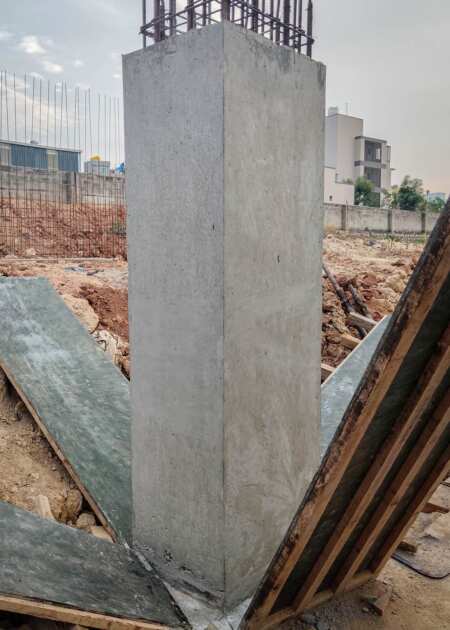
Generic PVC boards resist water, but plastic shuttering sheets like WoWBoards are engineered to stay stable under both moisture and concrete pressure. They maintain shape not just when wet, but when loaded.
Problem 2: Delamination and Peeling
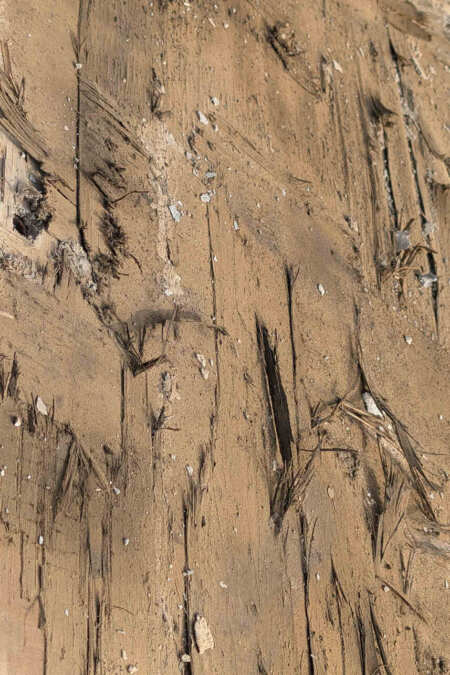
MR plywood is layered. Veneers bonded together with glue. Over repeated wetting and drying cycles, those layers begin to separate.
This delamination often starts quietly at the edges. By the time it is visible, the board has already lost strength.
Peeling surfaces leave marks on concrete. Rough patches appear. Extra plastering becomes necessary.
How PVC Boards Solve This
PVC boards are solid. There are no layers to peel apart. Delamination simply does not exist.
How WoWBoards Improve Reliability
WoWBoards are made from solid recycled plastic. They do not rely on glue. They do not peel. They do not weaken internally over time.
Problem 3: Short Lifespan and Frequent Replacement
MR plywood rarely lasts as long as contractors hope. In shuttering applications, many boards are rejected after a handful of uses.
This leads to:
- Frequent replacement
- Inconsistent formwork quality
- Rising material costs
It also leads to planning uncertainty. You never quite know which board will fail next.
How PVC Boards Extend Life
PVC boards last longer than MR plywood in wet environments. They do not rot or swell, which improves lifespan.
Why Plastic Shuttering Sheets Last Much Longer
WoWBoards are designed for repetition. Contractors often stop counting how many times a board has been used because performance remains consistent.
This dramatically reduces cost per use and simplifies material planning.
Problem 4: Inconsistent Concrete Finish
MR plywood delivers decent finish when new. Then it changes.
Surface wear, swelling, and peeling create variations. One slab looks smooth. The next needs correction. Finish becomes unpredictable.
Concrete remembers every imperfection in the shuttering.
How PVC Sheets Help
PVC sheets generally provide a smoother surface than plywood and do not degrade as quickly.
Why WoWBoards Deliver Consistency
The surface of WoWBoards remains smooth across multiple pours. Concrete does not stick easily. Demoulding is clean. Finish quality remains consistent.
This reduces plastering, patchwork, and rework.
Problem 5: Sensitivity to Storage Conditions
MR plywood needs careful storage. Dry area. Raised platform. Covered properly.
On most sites, this ideal storage does not exist.
Boards stacked on damp ground absorb moisture even before use. Damage starts before shuttering begins.
How PVC Boards Reduce Storage Stress
PVC boards tolerate moisture better. They can be stored outdoors without immediate damage.
How WoWBoards Simplify Site Logistics
WoWBoards thrive in typical site conditions. Rain, humidity, damp soil do not affect them. This flexibility makes site management easier.
Problem 6: Termite and Biological Damage
Wood attracts termites. Construction sites are often near soil, vegetation, and moisture. That is a perfect environment for termites.
MR plywood is vulnerable.
How PVC Boards Solve This Completely
Termites do not eat plastic. PVC boards and plastic shuttering sheets are naturally termite resistant.
This removes an entire category of risk.
Problem 7: Hidden Costs of Rework
MR plywood problems do not always show up as broken boards. They show up as:
- Extra plastering
- Surface corrections
- Grinding and filling
- Delays in finishing
These costs are often absorbed quietly. But over a project, they add up.
How Plastic Formwork Reduces Rework
A stable, smooth plastic formwork system reduces surface defects. Better formwork means less corrective work after demoulding.
WoWBoards help reduce these invisible costs significantly.
PVC Boards Are a Step Forward, But Not the Final Step
PVC boards and PVC sheets solve some MR plywood problems. They resist water. They avoid swelling. They improve durability.
But many PVC boards are not designed for shuttering loads. Flexing under concrete pressure can still occur.
This is where plastic shuttering sheets designed specifically for formwork outperform generic PVC solutions.
Why WoWBoards Solve All These Problems Together
WoWBoards combine the advantages of plastic with engineering meant for construction.
They:
- Do not absorb water
- Do not swell or delaminate
- Maintain shape under load
- Deliver consistent surface finish
- Last across many reuse cycles
- Are made from recycled plastic
They are not an upgrade to MR plywood. They are a replacement for it.
The Bigger Picture: Building Smarter, Not Just Cheaper
MR plywood feels cheaper upfront. PVC boards feel like a sensible improvement. Plastic shuttering sheets feel like an investment.
But construction economics are not about purchase price alone. They are about performance over time.
When replacement, rework, delays, and finish corrections are included, plastic shuttering sheets often emerge as the most economical option.
This is where logic beats habit.
Conclusion: MR Plywood Problems Are Not Inevitable
Swelling, peeling, rework, and frequent replacement are not unavoidable realities of construction. They are consequences of material choice.
MR plywood performs well in limited, dry applications. In shuttering and formwork, it struggles.
PVC boards address some of these struggles.
Plastic shuttering sheets like WoWBoards address all of them.
They bring predictability to a process that often feels uncertain.
Move Beyond MR Plywood With WoWBoards
If you are still managing the problems of MR plywood instead of eliminating them, it may be time to rethink.
Choose WoWBoards, the plastic shuttering sheets engineered for real construction conditions.
Fewer failures. Better finish. Longer life.
Your concrete will show the difference.