The first slab always feels like a success.
The second one builds confidence.
By the tenth, the truth begins to show.
Repetitive concrete work has a way of revealing what materials are really made of. In projects where slabs, beams, and columns are cast again and again, the choice of shuttering boards becomes one of the most important decisions on site.
Because in repetition, small problems do not stay small. They multiply.
A board that swells slightly will swell every time. A surface that degrades will degrade faster. A material that weakens will continue weakening.
So the question is not which board works once. The question is which board works consistently across cycles.
Let us break down how to choose the right concrete shuttering boards for repetitive work, and why many contractors today are shifting toward plastic ply board solutions like WoWBoards.
Why Repetition Changes Everything
In one time use scenarios, even average materials can deliver acceptable results.
But repetitive construction is a different game.
Every cycle introduces:
- Moisture exposure from curing
- Load from wet concrete
- Vibration during compaction
- Handling during dismantling
These stresses accumulate over time.
If your shuttering materials cannot handle repetition, you start seeing:
- Surface inconsistencies
- Alignment issues
- Increased rework
- Faster material rejection
Repetition demands durability, not just strength.
What to Look for in Shuttering Boards
Choosing the right concrete formwork sheets requires focusing on key performance factors.
Dimensional Stability
The board should not change shape when exposed to moisture.
If the board swells or warps, the concrete will reflect that change.
Load-Bearing Consistency
The board must hold wet concrete without bending or sagging.
This becomes critical in slabs and beams.
Surface Finish Retention
A good shuttering board should maintain a smooth surface across multiple cycles.
This reduces plastering and finishing work.
Reusability
The number of times a board can be reused directly impacts cost efficiency.
Ease of Handling
Boards should withstand repeated handling without damage.
The Traditional Choice: Waterproof Plywood
For years, waterproof plywood has been the default option for shuttering.
It is familiar. It is widely available. And its initial cost is relatively low.
But in repetitive work, its limitations become more visible.
Moisture Absorption
Despite the name, plywood still absorbs water through edges and holes.
This leads to swelling and dimensional changes.
Gradual Degradation
With each cycle, plywood loses strength.
This results in:
- Reduced load capacity
- Increased flexing
- More supports required
Surface Wear
The surface layer of plywood deteriorates over time.
Concrete starts sticking, and the finish quality drops.
Limited Reuse Cycles
Even high-quality plywood has a finite lifespan.
Frequent replacement becomes necessary in repetitive projects.
The Cost Illusion
At first glance, the waterproof plywood price may seem attractive.
But cost in construction is rarely about purchase price alone.
It includes:
- Number of reuse cycles
- Labour for rework
- Replacement frequency
- Finishing cost
When these factors are considered, plywood often turns out to be more expensive over time.
This is where many contractors begin exploring alternatives.
The Shift Toward Plastic Ply Boards
A plastic ply board offers a fundamentally different approach.
It is not made of wood. It does not rely on adhesives. It does not absorb moisture.
This changes how the material behaves in repetitive construction.
No Swelling
Plastic boards do not absorb water.
This eliminates swelling and warping completely.
Consistent Strength
Unlike plywood, plastic boards do not weaken over time due to moisture.
They maintain load bearing capacity across cycles.
Smooth Surface
The surface of plastic plywood remains consistent.
Concrete does not stick easily, which improves finish quality.
High Reuse Potential
Plastic boards are designed for repetition.
They can be used many times without significant performance loss.
Plastic Shuttering Materials in Action
On-site, the difference becomes clear quickly.
With plywood:
- Boards need careful storage
- Edges require protection
- Performance changes over time
With plastic shuttering materials:
- Storage is simpler
- Handling is easier
- Performance remains consistent
This reduces the need for constant monitoring and replacement.
WoWBoards: Designed for Repetition
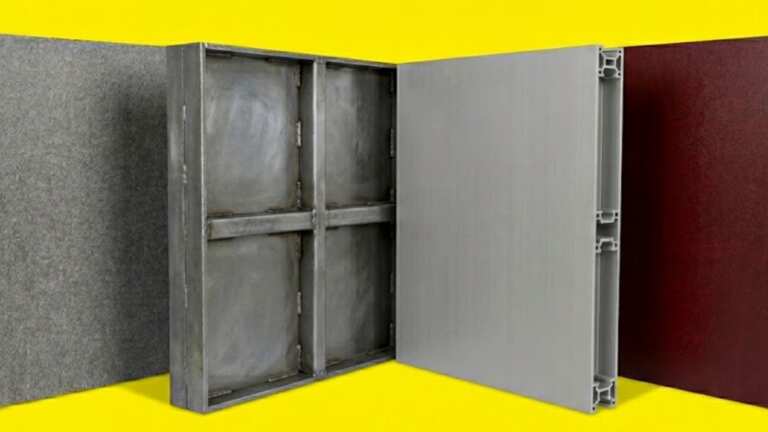
Among plastic solutions, WoWBoards by WoWMaterials stand out because they are engineered specifically for construction.
They are not generic plastic sheets. They are concrete shuttering boards built to handle real site conditions.
Stability Across Cycles
WoWBoards maintain their shape and strength even after repeated use.
This ensures consistent results in repetitive construction.
Moisture Immunity
Unlike water proof plywood, WoWBoards are not affected by water at all.
This makes them ideal for curing cycles and monsoon conditions.
Better Finish Quality
The smooth surface helps achieve cleaner concrete finish.
This reduces the need for additional finishing work.
Longer Life
Contractors often report significantly higher reuse cycles with WoWBoards.
This improves cost efficiency over time.
Repetition Without Compromise
The biggest advantage of choosing the right shuttering board is not just durability.
It is peace of mind.
When you know that your boards will perform the same way every time, you can focus on execution rather than troubleshooting.
Repetitive construction becomes smoother.
Planning becomes more accurate.
Quality becomes more consistent.
Sustainability Matters
Modern construction is also about responsibility.
Traditional concrete shuttering boards made from plywood rely on timber resources.
Plastic boards like WoWBoards are made from recycled materials.
This reduces environmental impact while improving performance.
It is a rare combination of sustainability and efficiency.
A Practical Comparison
Let us look at the difference in simple terms.
Plywood:
- Absorbs moisture
- Swells and warps
- Limited reuse
- Requires careful handling
Plastic ply board:
- Does not absorb water
- Maintains shape
- High reuse cycles
- Easier to manage
In repetitive work, these differences become critical.
Choosing the Right Board for Your Project
If your project involves:
- Multiple slabs
- Repetitive column casting
- Large scale RCC work
Then the choice of shuttering board will directly impact cost, quality, and timeline.
The right board is not the cheapest one. It is the one that performs consistently across cycles.
Conclusion: Build for Repetition, Not Just the First Pour
Repetitive concrete work demands materials that can handle stress, moisture, and time.
Traditional waterproof plywood can deliver initial results, but its limitations become evident over multiple cycles.
Plastic ply boards, especially WoWBoards, offer a more durable and reliable solution.
They eliminate swelling. They maintain strength. They deliver a consistent finish.
In repetitive construction, consistency is everything.
Build Smarter with WoWBoards
If you want shuttering boards that perform reliably across multiple cycles, it is time to upgrade.
Choose WoWBoards plastic shuttering panels by WoWMaterials.
More durability. Better consistency. Lower long-term cost.
Because in repetitive construction, the right board does not just support concrete. It supports your entire project.